- Currency
- Euro
- Plug
- British type G
- Languages
- Maltese, English
- Time zone
- CET, as Italy
- Driving
- On the left
- Emergency
- 112
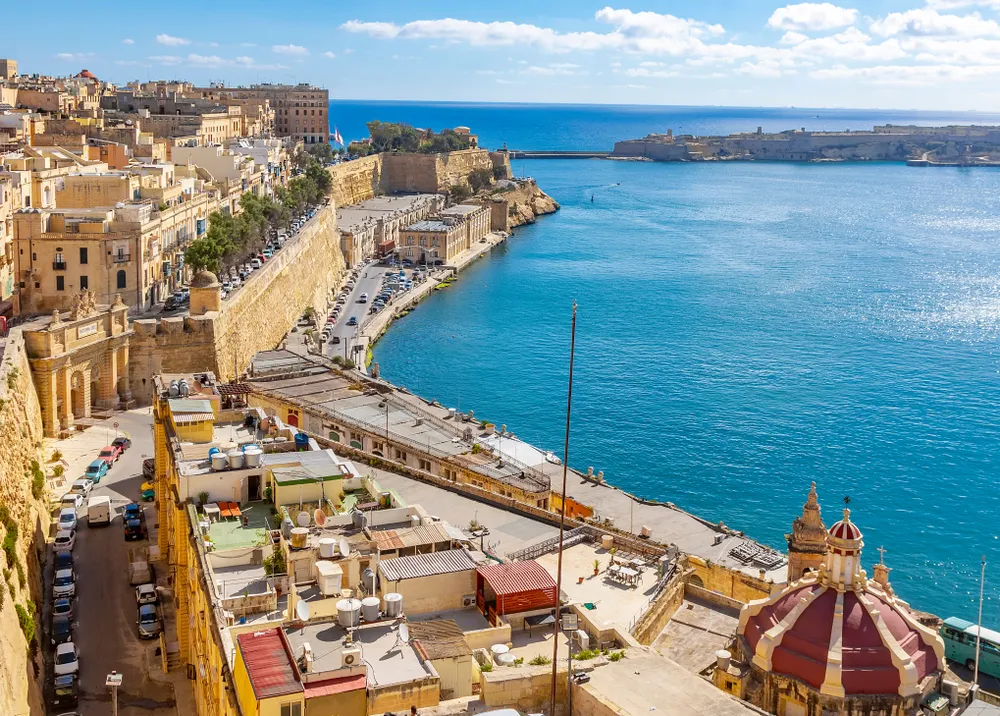 The Grand Harbour from the Upper Barrakka Gardens — the view every harbour base is measured against.
Malta is small enough to cross in under an hour and dense enough to fill two weeks. That combination is what trips people up. They arrive expecting a Greek island with beaches, and find a harbour city built by a military order, temples older than Stonehenge, a British century of red phone boxes and left-hand traffic, and a coastline that is mostly rock ledge and ladder into very clear water.
Read in that order — what it is, how you get there, where you sleep, how long, how you move — and the trip shapes itself. This guide follows that order. Each section has its own page where the detail lives.
What Malta is, in a paragraph
Three islands. Malta is the big one: Valletta and the Grand Harbour on the east coast, the old capital Mdina in the middle, sandy bays in the north-west, cliffs in the south. Gozo is a 25-minute ferry north: greener, slower, its own register. Comino sits between them: one crowded lagoon and an empty, walkable rest. There is no rail anywhere, no road or tunnel to anywhere else, and the bus network is a hub-and-spoke on Valletta. Everything else follows from those facts.
Getting there
There is one airport, Malta International at Luqa, about five kilometres south of Valletta. Roughly thirty airlines fly in from about a hundred airports in summer, and — unusually for the Mediterranean — winter keeps about three-quarters of them. From Italy it is under two hours; from London, Frankfurt or Paris, around three; from New York, one seasonal nonstop and otherwise a European hub.
The only other way in is the ferry from Pozzallo in Sicily: about an hour and three-quarters, one to three sailings a day, year-round, cars carried. It is a real option if you are already in Sicily, and an unreliable one in winter, when sailings are cancelled for weather often enough that you should never chain it to a same-day flight.
If you are arriving from outside the EU — Britain included — the new Entry/Exit System registers you on first entry, and at Malta that has meant real queues since April 2026. Nothing to do about it except not book a tight onward connection.
The full picture — airlines by market, the late-night arrival pattern, and every way from the airport or the port to your base — is in Getting there.
Where to stay
This is the decision that shapes everything else, and it is an area decision, not a hotel search.
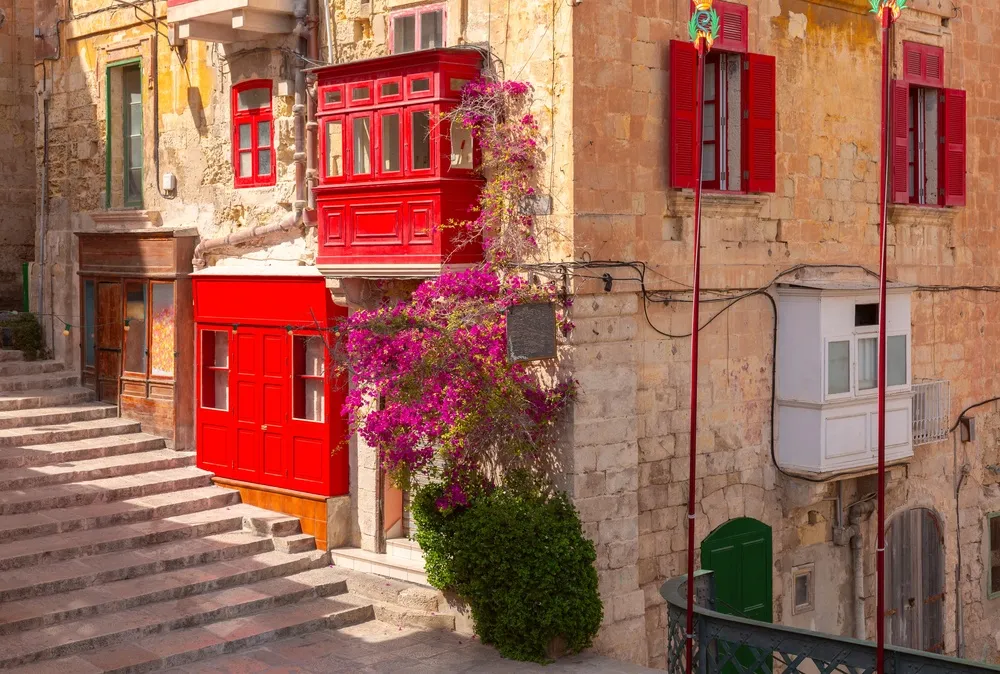 Valletta’s streets are stairs. Beautiful to walk, impossible with a wheeled case or a pushchair.
For a first visit of under a week, base on the harbour. Valletta gives you the atmosphere and the evenings to yourself once the cruise passengers leave; it is the weakest base for beach and nightlife, the streets are stepped, and the townhouses often set three-night minimums and refuse young children. Sliema is function: the ferry and bus hub, the widest room stock, a flat promenade, rock swimming off the front — and, in 2026, construction on what feels like every other street. Ask what is being built next door before you book. St Julian’s is the nightlife pole. The Three Cities across the Grand Harbour are the sleeper for a second visit, and the summer ferries running to midnight have fixed their one problem.
Mellieħa and the north are for beach-first family trips and Gozo proximity, and far from everything historic. St Paul’s Bay, Buġibba and Qawra are the budget strip. The south and the west have almost no beds; they are day trips.
The German guidebooks propose the opposite strategy: base on Gozo and visit Malta in two or three day trips. For a quiet, countryside-and-swimming week that is the right answer. For a history trip it is the wrong one.
Area by area, with who each suits and who it disappoints, in Where to stay.
How long
Nobody credible says under three days. Sight-collectors are done in four or five. Travellers who like history happily fill a week or two. The pattern that works for five days or more is a harbour base plus two nights on Gozo — “one day on Gozo was not enough” is the recurring regret in every forum I have read, and it matches my own.
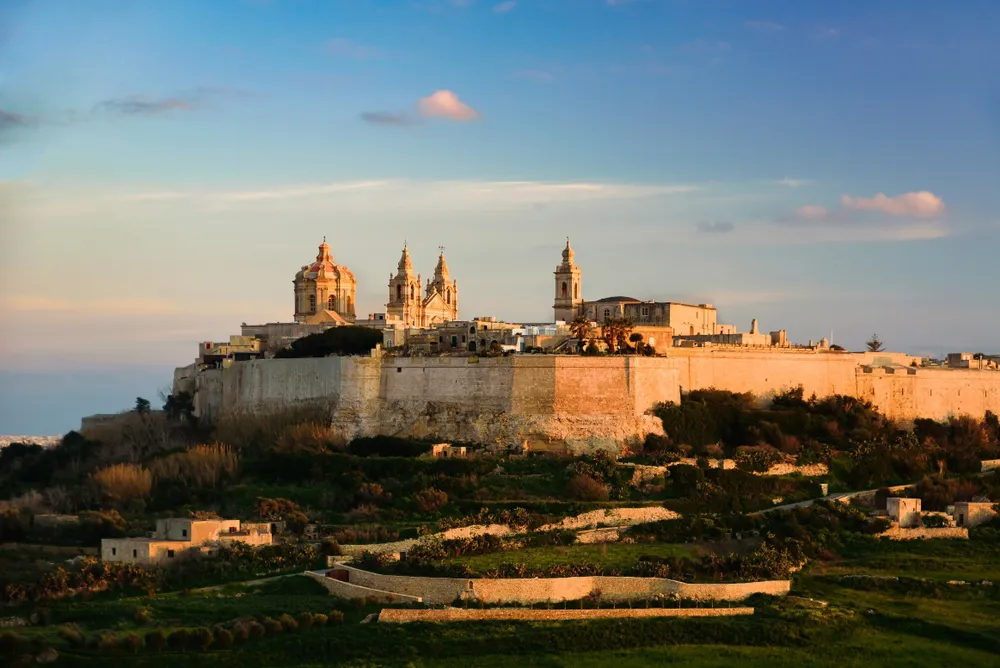 Mdina from Mtarfa at sunset. Arrive after five, when the coaches have gone.
What changes between a short break, five days, a week and Malta-plus-Gozo, in How long; the case for Gozo nights, and everything about the second island, in Gozo.
Moving around
Most travellers end up on the bus and ride-hail, and the drivers will tell you why: left-hand traffic, single-car village lanes, chronic congestion and parking that becomes the holiday in Sliema, Valletta and Victoria. The bus works — every ten minutes to hourly, a two-hour ticket with free transfers, tap a bank card on board — but it is Valletta-centred, so a cross-island trip can take three times what the map suggests. The harbour ferries between Sliema, Valletta and the Three Cities are the best transport in the country.
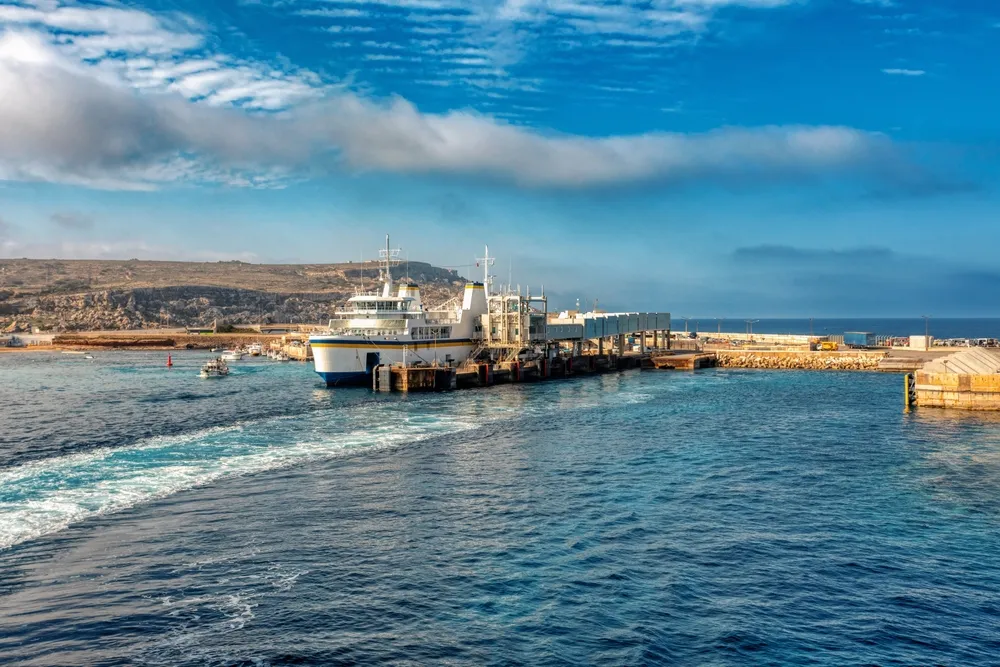 Boarding at Ċirkewwa. Twenty-five minutes to Gozo, around the clock; you pay on the way back.
A car earns its keep for the west coast, the south-coast temples, beach-hopping the north — and above all on Gozo, where hiring at the ferry port for a day or two is the sensible compromise.
The Gozo Channel ferry runs 24 hours; you pay only on the Gozo side. A fast passenger ferry runs Valletta to Gozo in 45 minutes, and since May 2026 a second one links Sliema and Buġibba to Gozo in the summer months.
The car question, honestly, in Getting around.
When to go
July and August are the hottest, most crowded and most expensive; the Blue Lagoon is at its worst. May and June, and September and October, are the sweet spots — September has the warmest sea. Winter is the sleeper: mild, quiet, cheap, Mdina actually silent, but the Comino boats and beach businesses close and the wind decides whether the Gozo ferry runs.
More useful than the month is the hour. Cruise passengers fill Valletta and Mdina at midday; coaches fill Marsaxlokk between nine and eleven; the lagoon boat slots create crowd tides. Early and late, in any month, you have the place to yourself. The months, the festa calendar and which beach to pick on any given day by the wind are in When to go.
What you must book ahead
Very little, but the little matters. The Hypogeum — the underground Neolithic temple — sells out two to three months ahead in season, on Heritage Malta’s site only; a few next-day tickets go on sale each morning at Fort St Elmo. Landing at the Blue Lagoon on Comino needs a free timed pass, booked about two months out in summer. Summer stays in Valletta townhouses and Gozo farmhouses go early. Everything else is walk-up.
The swimming, in one paragraph
Malta is not a beach destination. The real sand is the north-west trio of Golden Bay, Għajn Tuffieħa and Ġnejna, the long shallow bay at Mellieħa, and Ramla on Gozo. Everything else is rock, ladders and some of the clearest water in the Mediterranean — which, once you stop expecting sand, is the better deal. Which bay to choose depends on the wind that day — the rule is in When to go.
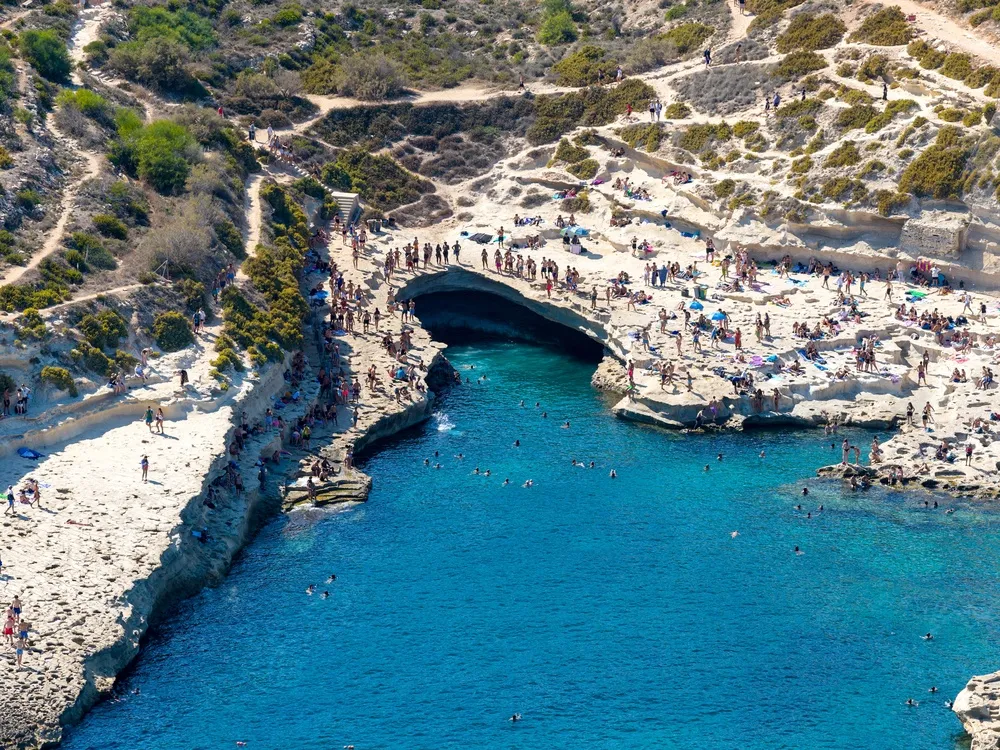 St Peter’s Pool, Delimara, on a summer weekend. This is what swimming in Malta looks like: rock, ladder, clear water — and company.
Before you go
The fixed facts live in Essentials, each with its own review date: documents, money and ATMs (Malta is more cash-heavy than you expect once you leave the strip), languages, phone and roaming, the British plug, health and 112, driving rules, Sunday and holiday hours, safety, time zone.
Two things worth knowing before any of that: Etna closes the airport for a few days some years, and Italian and French air-traffic strikes cancel Malta flights that never go near Italy or France. Neither is a reason not to come. Both are a reason to leave a little slack in the plan.